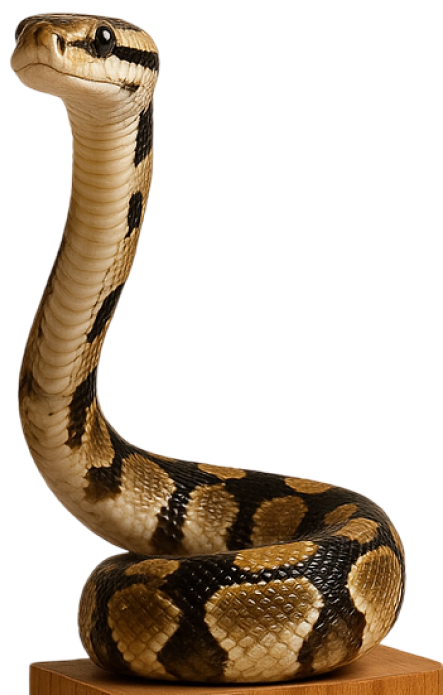
Ball Python Care Sheet
Quick Facts
| Species | Python regius |
|---|---|
| Level | Intermediate |
| Enclosure | 150 × 75 × 75 cm |
| Temp. / RH | W 28–30°C · C 24–27°C RH 60–80% |
| Adult size | 90–150 cm |
| Lifespan | 20–30 years |
Care & Husbandry
Ball pythons are known for their generally calm temperament, manageable size and secretive, crepuscular behaviour. This care sheet covers the essential husbandry requirements, including housing, temperature, humidity, feeding, lifespan and common health challenges.
Natural Habitat
Native landscapes in western and central Africa include savanna, open woodland and cultivated land. Grass, scattered trees and patches of cover create a varied landscape rather than a uniformly wet rainforest. Burrows provide sheltered conditions; opportunities to move above ground should also be available in captivity.
Housing
Adult ball pythons (Python regius) should be provided with an enclosure large enough to allow them to fully stretch out. An enclosure of 120 × 60 × 60 cm provides an appropriate minimum for adults up to approximately 120 cm, while longer individuals require correspondingly longer housing. An enclosure of 150 × 60 × 60 cm or larger is recommended for larger adults and provides additional opportunities for exploration and environmental enrichment.
The enclosure should include at least two secure, appropriately sized hides, with one positioned at the warm end and another at the cool end. Additional cover, sturdy branches and climbing structures provide enrichment and allow the snake to express a wider range of natural behaviours. Ball pythons are primarily terrestrial but will climb when suitable opportunities are available.
A large, stable water bowl containing fresh drinking water should be available at all times and should allow the snake to soak if desired. A moisture-retaining substrate should help maintain appropriate humidity without remaining continuously waterlogged. Ball pythons should generally be housed individually.
A consistent day-night cycle should be provided. Appropriate low-level UVB lighting is recommended as part of modern husbandry, with shaded areas and secure hides available so the snake can regulate its exposure.
Temperature & Humidity
Provide a clear thermal gradient so the ball python can regulate its body temperature. A basking surface of approximately 35–40°C can be provided, while the warm hide should remain around 30–32°C. The cooler portion of the enclosure should remain around 24–26°C.
The basking value refers to surface temperature rather than the surrounding air temperature. Surface temperatures should be checked with an infrared thermometer, while ambient temperatures should be monitored using accurate digital probes. Heating equipment should be thermostatically controlled and accessible heat sources appropriately guarded.
A natural reduction in temperature can occur at night. Additional night-time heating is only required when ambient conditions would otherwise fall below an appropriate range for the species.
Ambient humidity should generally remain around 60–80% when measured on the cool side of the enclosure. Natural fluctuations and higher night-time humidity are normal. Suitable humidity should be maintained throughout the year rather than keeping the enclosure deliberately dry and increasing humidity only during shedding.
A humid hide can provide an additional moisture-rich microclimate when required. Substrate should retain sufficient moisture to support appropriate humidity without remaining continuously saturated, and adequate ventilation should always be maintained.
Feeding
Ball pythons are carnivorous and should be fed appropriately sized whole vertebrate prey. Frozen-thawed rodents, including mice and rats, provide a practical staple diet in captivity.
- Hatchlings and young juveniles: approximately every 5–7 days.
- Older juveniles: approximately every 7–14 days.
- Young adults: approximately every 14–21 days.
- Mature adults: approximately every 21–30 days, adjusted according to meal size and body condition.
For growing juveniles, individual meals can generally be approximately 10–15% of the snake’s body weight, with proportionally smaller meals and longer feeding intervals used as the animal matures. Prey size and feeding frequency should always be adjusted according to age, size, activity, reproductive status and body condition.
Ball pythons may occasionally refuse food, particularly in association with seasonal or reproductive behaviour. Persistent food refusal should not automatically be considered normal. Husbandry, environmental conditions, stress, health and body condition should be assessed, particularly when weight loss occurs.
Frozen-thawed prey is preferable to live prey because it reduces the risk of prey-related injury.
Lifespan
Ball pythons are long-lived snakes. With appropriate housing, nutrition and long-term husbandry, they commonly live for approximately 25–30 years in captivity, with individuals capable of living for more than 30 years.
Common Health Challenges
- Obesity: Excessive prey size or feeding frequency can cause unhealthy weight gain, particularly in mature adults.
- Feeding difficulties: Periods of food refusal can occur, but persistent fasting should prompt assessment of husbandry, stress, body condition and possible illness.
- Respiratory disease: Inappropriate temperatures, poor ventilation, unhygienic conditions or persistently wet substrate can contribute to respiratory problems.
- Dehydration and shedding problems: Insufficient environmental humidity or inadequate hydration can cause dehydration and incomplete sheds.
- Thermal injury: Uncontrolled or unguarded heating equipment can cause serious burns.
- Stomatitis: Oral injuries, infection and inappropriate husbandry can contribute to inflammation and infection of the mouth.
- Parasites: External parasites such as snake mites and internal parasites can occur, particularly in newly acquired or exposed animals.