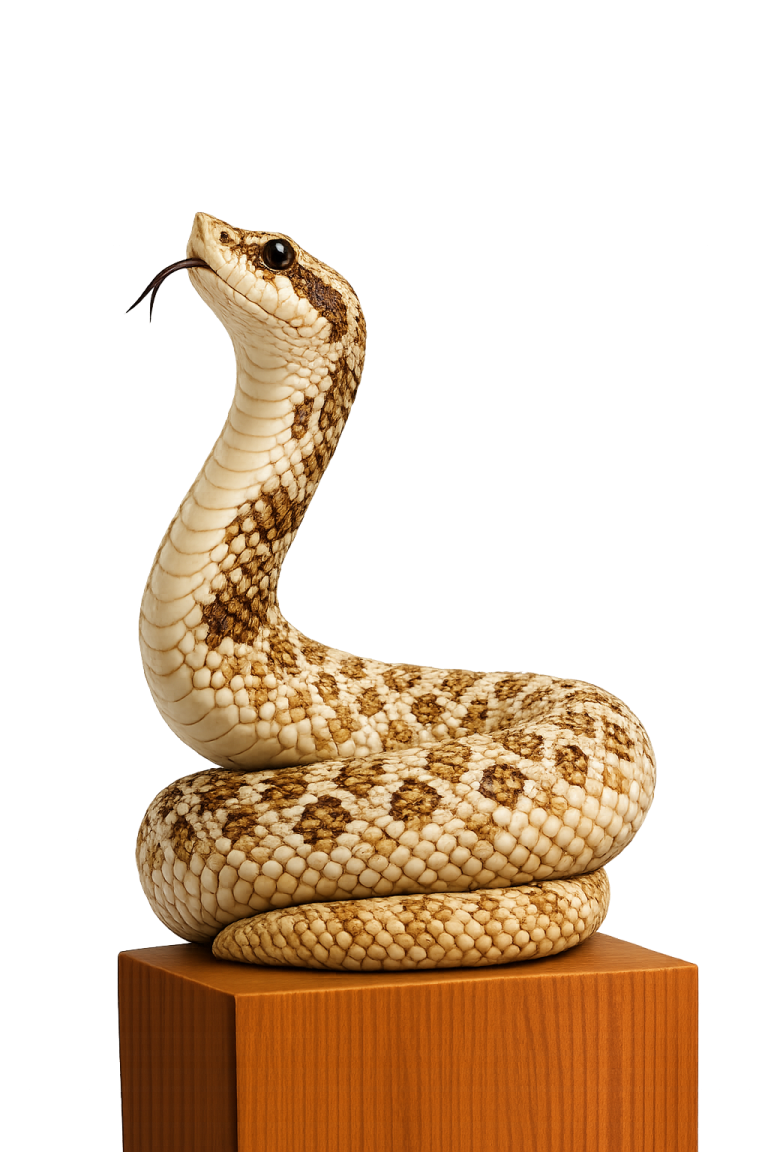
Western Hognose Care Sheet
Quick Facts
| Species | Heterodon nasicus |
|---|---|
| Level | Intermediate |
| Enclosure | 90 × 45 × 45 cm |
| Temp. / RH | W 27–29°C · C 21–24°C RH 30–50% |
| Adult size | 30–90 cm |
| Lifespan | 10–20 years |
Care & Husbandry
Western hognoses are known for their upturned snout, digging behaviour and distinctive defensive displays. This care sheet covers the essential husbandry requirements, including housing, temperature, humidity, feeding, lifespan and common health challenges.
Natural Habitat
Much of their natural range consists of North American prairie and other relatively open country with sandy or loose soils. Grasses and scattered vegetation provide cover, while burrows offer sheltered resting places. Their habitat is not simply bare desert sand: cover and underground refuges remain important.
Housing
Western hognoses inhabit open landscapes, including grasslands and sand prairies, where loose, sandy soils allow them to dig for food and retreat underground. Their enclosure should provide both opportunities for surface exploration and access to sheltered burrowing areas.
An enclosure measuring 90 × 45 × 45 cm is a practical starting size for an adult. The snake must be able to stretch out fully along its length; larger individuals require longer housing. Females generally grow larger than males. House animals individually in a secure enclosure with adequate ventilation.
Use a reptile-safe, soil-based substrate containing sand that remains diggable and supports burrows. A suitable mixture should provide structure rather than consist entirely of loose sand or gravel. Its performance depends on the materials and moisture content, so a fixed mixing ratio alone does not guarantee suitability.
Provide a substrate depth of at least 10 cm, with deeper areas where possible, particularly for larger females. The snake should be able to bury itself completely. Allow the surface to remain relatively dry while providing access to a more humid retreat; avoid keeping the entire substrate either waterlogged or uniformly bone-dry.
Include snug hides at both the warm and cool ends, together with cork bark, leaf litter, low branches and other cover. Position heavy furnishings securely on the enclosure base or stable supports before adding substrate so that digging cannot undermine them. Keep fresh drinking water available in a stable bowl and remove waste and contaminated substrate promptly.
Temperature & Humidity
Provide a daytime basking surface of 32–35°C, warm-side air temperatures of 27–29°C and a cooler retreat of 21–24°C. These are practical husbandry targets, not temperatures to maintain uniformly throughout the enclosure. The basking value refers specifically to the surface beneath the heat source.
Position daytime heating above one end of the enclosure, allowing the snake to move between exposed warmth, shaded cover and cooler burrowing areas. Control heating with a suitable thermostat and guard accessible heat sources. Check surface temperatures with an infrared thermometer and air temperatures with probes placed at the animal’s level.
Turn daytime lighting off at night. A night-time air temperature of 21–23°C provides a practical starting range for routine care. Use supplementary heat only where needed to maintain suitable conditions.
Aim for ambient humidity of 30–50%, while retaining access to a humid hide or a more humid area within the substrate. Relative humidity changes with temperature, position and time of day; the warm end will usually read lower than cooler areas. Use a hygrometer with a stated accuracy, check its readings periodically and treat individual readings as a guide rather than an exact description of the whole enclosure.
Provide a regular day–night cycle, with 12 hours of daylight as a starting schedule. Low-level UVB lighting is recommended alongside shaded areas and enclosed hides. Account for lamp distance, reflector and mesh when selecting and positioning the equipment; a bulb’s UVB percentage alone does not describe the exposure reaching the snake.
Brumation is the seasonal winter dormancy that western hognoses undergo in the wild. Activity and appetite can change seasonally in captivity, but reduced feeding alone does not establish that a snake is entering brumation. Deliberate winter cooling requires a separate plan appropriate to the animal’s health and condition, with experienced guidance. Do not cool an unwell or underweight animal. The temperatures above describe active-season care, not a brumation protocol.
Feeding
Western hognoses have a varied natural diet that includes amphibians, reptiles and reptile eggs. Food use differs with age and location; they should not be regarded simply as specialist rodent eaters. Appropriately sized whole mice are commonly used in captivity, but individual acceptance varies.
Some hatchlings and juveniles are difficult to establish on rodents and may respond more readily to amphibian or reptile scents. Confirm the established feeding routine with the breeder or previous keeper: prey species, size, feeding interval, whether prey is live, freshly killed or frozen-thawed, and whether scenting is required.
Changing prey species and changing from live to frozen-thawed food are separate transitions. Either can require time. Scenting transfers the smell of an accepted food to a new prey item and can help some animals recognise it as food. An animal already eating mice should not automatically be assumed to accept unscented, frozen-thawed mice.
Frozen-thawed prey is preferable where accepted because it avoids injuries from live prey. Thaw it in a refrigerator, then warm it before offering it with feeding tongs. Offer appropriately sized whole prey rather than oversized meals. Routine supplementation is generally unnecessary when a suitable whole-prey diet is provided.
For adults, feeding every 7–14 days is a practical starting interval. Growing juveniles generally require smaller, more frequent meals. Continue an established feeding routine initially, then adjust meal size and frequency according to growth, activity and body condition. Frequent feeding of large meals can lead to excessive weight gain.
If food is refused, review temperatures, cover, recent changes, shedding, season and the animal’s feeding history. Monitor body condition and weight rather than judging the situation solely by the number of missed meals. Seek veterinary advice if refusal is accompanied by weight loss or other signs of illness, or persists despite appropriate adjustments.
Avoid handling for three days after feeding. Wash prey odours from your hands before handling and use tongs when offering food. Western hognoses can inflict medically significant bites, particularly when they maintain a feeding grip. Seek medical advice following a bite if pain, swelling, blistering or other symptoms develop.
Lifespan
Captive western hognoses have reached nearly 20 years. This is recorded longevity rather than an established average lifespan. Keeping this species should therefore be approached as a long-term commitment.
Common Health Challenges
- Feeding difficulties: Prey preferences, seasonal changes, stress and unsuitable conditions can affect feeding. Weight loss or additional symptoms require further assessment.
- Obesity: Excessive meal size or feeding frequency can cause unhealthy weight gain, particularly when feeding is not adjusted as growth slows.
- Shedding problems: Review hydration and access to suitable humid retreats when sheds are incomplete.
- Skin and mouth infections: Persistent wet, contaminated conditions can contribute to skin problems. Skin lesions, mouth swelling or abnormal discharge require assessment.
- Parasites: Mites and internal parasites can occur. Keep newly acquired animals separate from an existing collection and monitor their condition before introducing shared equipment.
- Thermal injuries: Prevent contact with unguarded heaters and check that thermostats and temperature probes are functioning correctly.