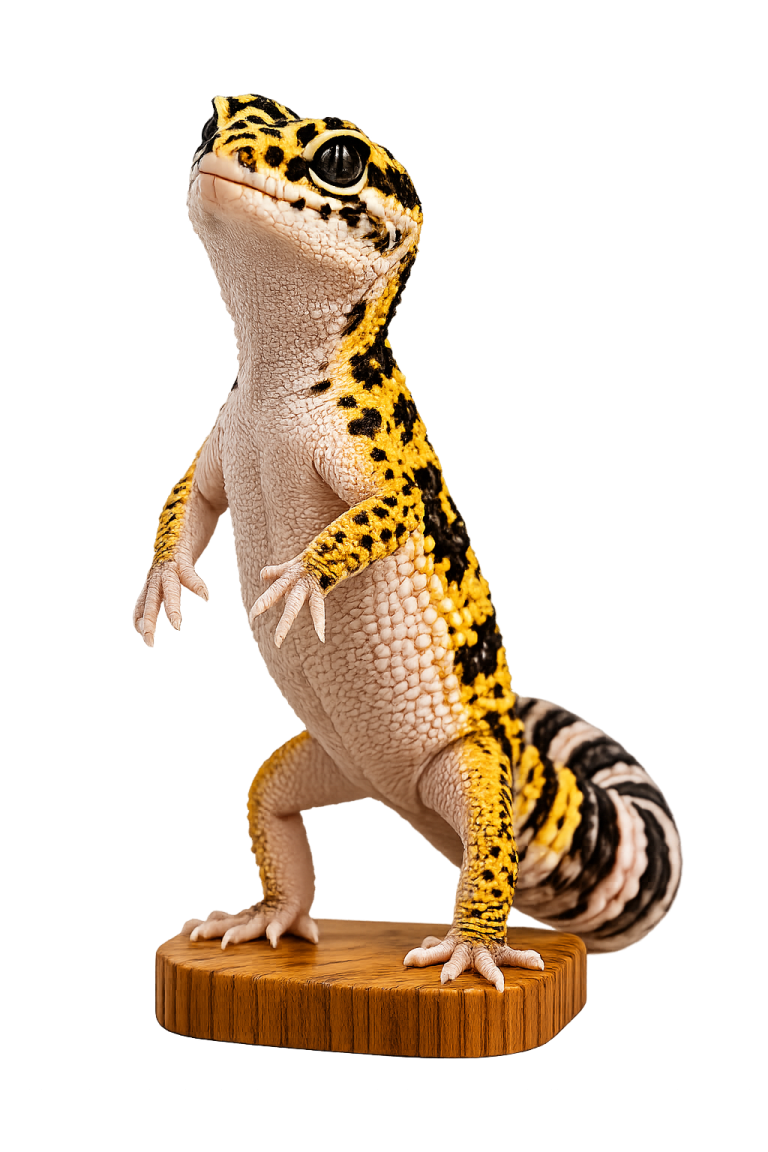
Leopard Gecko Care Sheet
Quick Facts
| Species | Eublepharis macularius |
|---|---|
| Level | Beginner |
| Enclosure | 90 × 45 × 45 cm |
| Temp. / RH | W 28–30°C · C 24–26°C RH 30–40% |
| Adult size | 18–25 cm |
| Lifespan | 15–20 years |
Care & Husbandry
Leopard geckos are known for their manageable size, generally calm temperament and distinctive spotted appearance. This care sheet covers the essential husbandry requirements, including housing, temperature, humidity, feeding, lifespan and common health challenges.
Natural Habitat
Natural environments include dry and semi-arid country in parts of southern Asia, with stones, firm soil, sparse vegetation and protected crevices. Some populations also occur in dry woodland. The useful model is a structured, sheltered ground habitat, not an uninterrupted bed of loose sand.
Housing
Adult leopard geckos (Eublepharis macularius) should be housed in an enclosure measuring at least 90 × 45 × 45 cm. An enclosure of 120 × 60 × 60 cm or larger is recommended where space allows, providing additional room for exploration, thermoregulation and environmental enrichment.
The enclosure should include multiple secure hides distributed across the thermal gradient, including a dedicated humid hide. Rocks, cork, sturdy branches and other low climbing structures provide additional opportunities for exploration and natural behaviour.
A suitable loose substrate can be used for healthy leopard geckos when other husbandry parameters are correct. A naturalistic soil-based mixture containing an appropriate proportion of sand can support digging behaviour. Persistently wet substrate and unsuitable particulate materials should be avoided.
A shallow, stable water dish containing fresh drinking water should always be available. Leopard geckos should generally be housed individually to avoid competition, stress and injury.
A consistent day-night cycle should be provided. Appropriate low-level UVB lighting is strongly recommended, with a basking-zone UV Index of approximately 0.5–1.5. Shaded areas and secure retreats should remain available so the gecko can regulate its exposure.
Temperature & Humidity
Provide a thermal gradient that allows the leopard gecko to regulate its body temperature. The basking surface should reach approximately 34–36°C, while the warm area should remain around 28–32°C. The cooler portion of the enclosure should remain approximately 21–25°C.
Basking temperature refers to surface temperature rather than surrounding air temperature. Surface temperatures should be checked using an infrared thermometer, while ambient temperatures should be monitored with accurate digital probes. Heating equipment should be appropriately controlled to prevent overheating and burns.
Temperatures can fall naturally at night. Additional night-time heating is generally unnecessary unless the enclosure would remain below approximately 18°C for extended periods.
Ambient humidity should generally remain around 30–50%. A humid hide containing consistently moist but not waterlogged material should always be available, particularly to support hydration and successful shedding.
Good ventilation should be maintained, and the main enclosure should not remain persistently damp.
Feeding
Leopard geckos are insectivorous and should receive a varied diet of appropriately sized live invertebrate prey. Suitable feeders include crickets, roaches, locusts, mealworms and other appropriately sized feeder insects. Dietary variety is preferable to relying heavily on a single feeder species.
- Hatchlings and very young juveniles: approximately daily.
- Juveniles: approximately every other day.
- Adults: approximately 2–3 times per week.
Feeder insects should be appropriately gut-loaded before feeding. Feeding quantity and frequency should be adjusted according to age, size, activity, reproductive status and body condition. Tail condition provides a useful additional indication of the animal’s energy reserves.
Appropriate calcium and vitamin/mineral supplementation should be provided. Vitamin D3 supplementation should be adjusted according to the amount of effective UVB exposure available to the gecko.
Lifespan
Leopard geckos are long-lived reptiles. With appropriate housing, nutrition and long-term husbandry, they commonly live for approximately 15–20 years in captivity, with well-maintained individuals capable of living for more than 20 years.
Common Health Challenges
- Metabolic bone disease: Inadequate calcium, vitamin D3 or UVB provision can interfere with normal calcium metabolism and skeletal health.
- Retained shed: Inadequate access to an appropriate humid microclimate can cause retained skin, particularly around the toes, tail and eyes.
- Obesity: Excessive feeding or frequent use of calorie-dense feeder insects can result in unhealthy weight gain.
- Digestive obstruction: Inappropriate temperatures, dehydration, oversized prey or ingestion of unsuitable materials can contribute to gastrointestinal obstruction.
- Tail loss: Stress, restraint, injury or conflict with another gecko can trigger tail autotomy.
- Thermal injury: Uncontrolled or accessible heating equipment can cause burns or overheating.
- Respiratory disease: Incorrect temperatures, poor ventilation or persistently damp conditions can contribute to respiratory problems.
- Cryptosporidiosis: Infection with Cryptosporidium can cause progressive weight loss and gastrointestinal disease and requires veterinary assessment.
- Parasites: Internal and external parasites can occur, particularly in newly acquired or exposed animals.